 Skip to content
Treatment
Couperose & skin imperfections
Some skin imperfections need more than care alone — they call for precision and targeted correction.
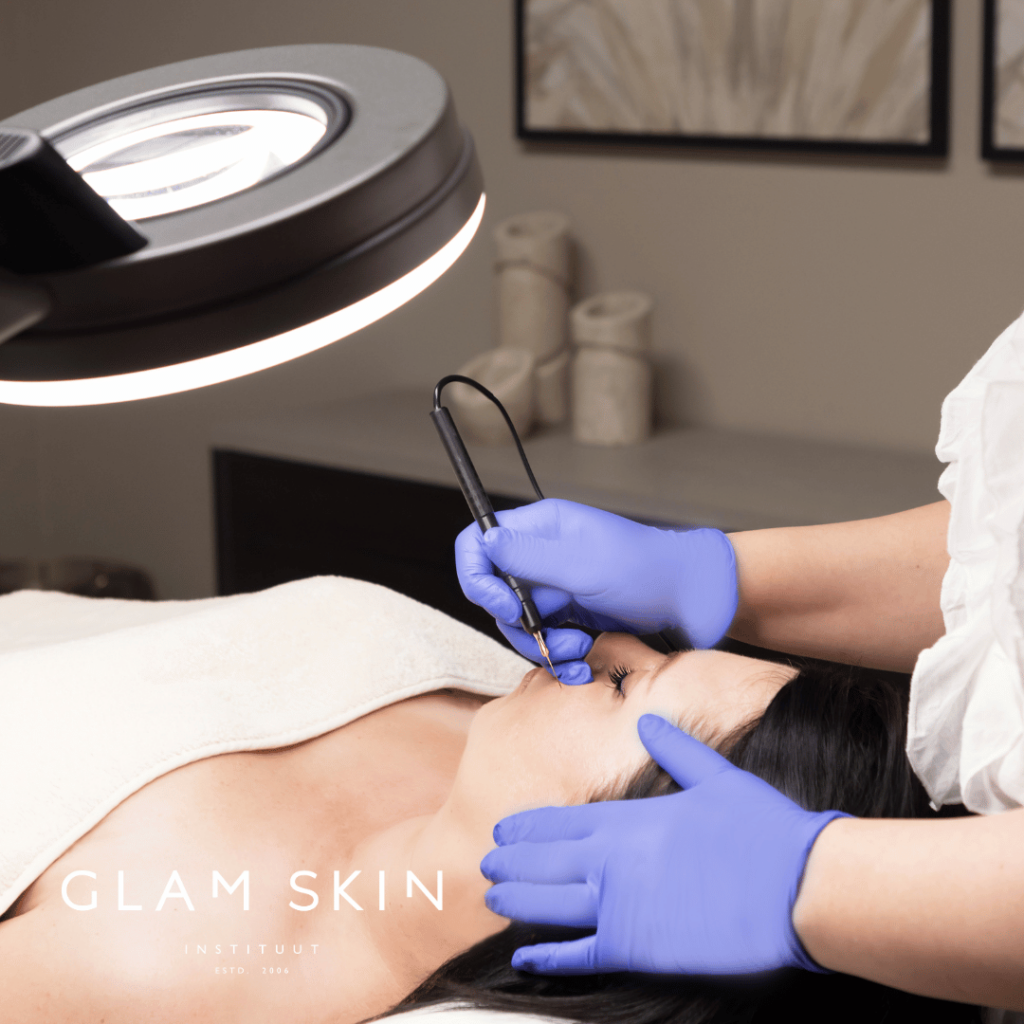
With T-AWAY2 we treat couperose, spider naevi, angiomas, skin tags, pigmentation and age spots, and milia, among other things, very precisely using RWS technology (Radio Wave Spectrum).
Controlled energy is converted into heat through a fine applicator and applied exactly where correction is needed. Small blood vessels are coagulated and then cleared away naturally by the body. Pigmentation, connective tissue irregularities and milia can be treated very locally and in a controlled way.
This allows the skin to look calmer, more even and more refined, without treating a larger area of skin unnecessarily.
Important: do not wash or cleanse the treated area for 3 days, so that the process can run its course undisturbed.
Questions about couperose removal with T-Away
What are the contraindications for couperose removal?
- Epilepsy
- Cold sores (if you have a cold sore, no treatment of the face will take place. If you do not have a cold sore but are a carrier of the virus, it is important to take L-lysine for at least 3 weeks before and 3 weeks after a treatment)
- Skin cancer or other forms of cancer
- An active skin condition such as psoriasis, dermatitis/eczema or another rash in the area to be treated
- Pacemaker or internal defibrillator
- Being under the influence of alcohol or drugs
- HIV
- Haemophilia/blood disorder, thrombosis or other blood clotting problems
- Use of steroid-containing medication or non-steroidal anti-inflammatory drugs. These reduce or block the effect of the treatment
- Skin conditions (pigment disorders, growths, etc.) that have not been clearly diagnosed by a doctor, as well as any condition that requires medical treatment
- Pregnancy and breastfeeding
- Permanent make-up in the area to be treated
- A tendency towards keloid or hypertrophic scars, as the risk of scarring is then high
Relative contraindications:
Please consult your doctor about the options first.
- Diabetes
- An immune disorder
- High blood pressure or a heart condition
- Use of blood thinners/anticoagulants
T-Away and other treatments?
- After a mild facial treatment, you can have a T-Away2 treatment after 1–2 weeks.
- After an intensive facial treatment, you can have a T-Away2 treatment after 4–6 weeks.
- Recently had a T-Away treatment? You can have a facial treatment after about 4–6 weeks.
What should and shouldn't I do after a T-Away treatment?
- Do not shower or get the skin wet for the first 3 days.
Avoid wet areas such as the sauna or swimming pool from day 3 to day 7 - Do not apply make-up for the first 3 days
- Do not touch, scratch or pick the scabs
- Pat the skin dry after showering
- Avoid sunlight for the first 6 weeks and then protect the skin with SPF 50 for at least 6 months
- Avoid typically irritating and perfumed cosmetic products for at least the first 72 hours
- Avoid sunlight as much as possible for 6 weeks or the entire course period and use SPF 30/50
What are the small risks after a T-Away treatment?
- Discomfort after the treatment, such as local swelling, redness and tiredness
- Although uncommon, in some cases treatment with T-Away2 can lead to small visible tissue changes and/or scarring
- Temporary hyper- or hypopigmentation may occur, but these discolourations normally disappear within three to six months. It is important to use SPF 30 or SPF 50 protection every day