 Skip to content

Treatment
Deep Tissue Massage
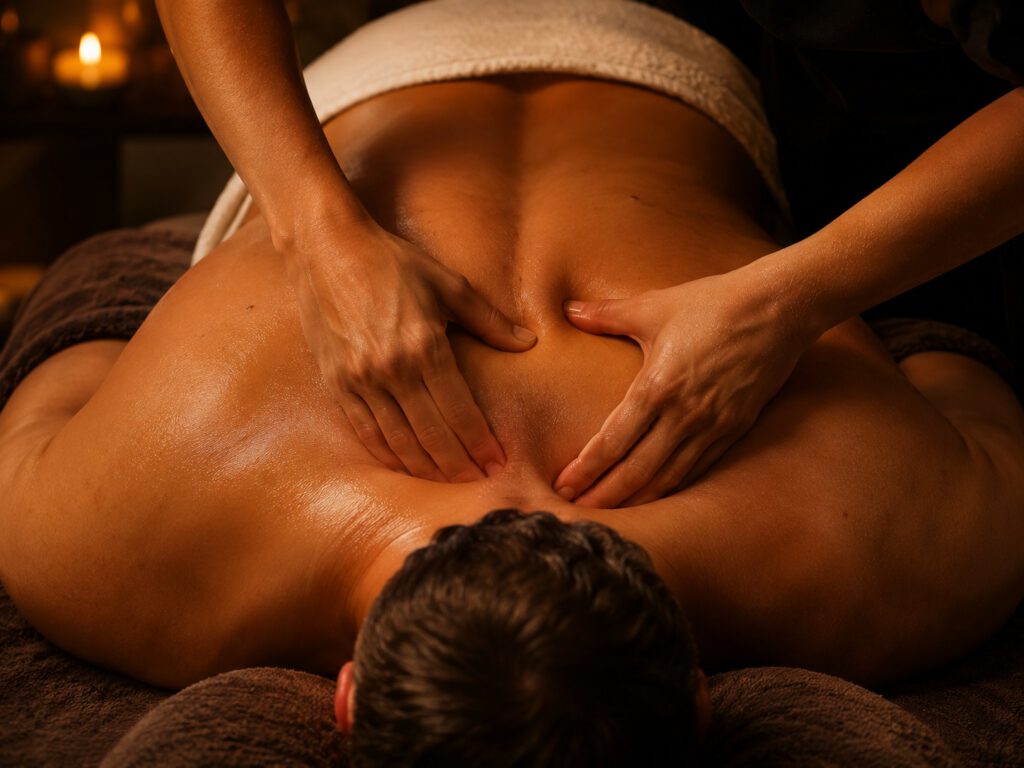
A deep tissue massage is a firm, targeted massage that works on the deeper layers of muscle and the connective tissue (fascia) around them. With slow, sustained strokes and focused pressure from fingers, thumbs, knuckles or forearm, we work on stubborn tension, adhesions and stiff areas. It is not a massage to doze off to, but a treatment for a body that feels stuck.
Deep is not the same as hard. We build the pressure up gradually and you tell us at every moment what feels right. That way we reach the areas that really need attention, without your muscles tensing up in response.
Who is deep tissue massage suitable for?
- Tension in the neck, shoulders and upper back from working at a screen
- A stiff or sore lower back
- Muscles that feel stuck after exercise, heavy lifting or long periods in the same position
- Tension headaches that start in the neck and shoulders
- Stiffness and a limited range of motion
How the treatment works
We begin with a short intake: where is your complaint, how long has it been going on and how much pressure do you prefer? Then we warm up the muscles with calm strokes. Next we work more deeply on the areas that are stuck, always at your pace. You finish with gentle strokes so the muscles can let go.
Duration and course of treatments
- 60 minutes: focused on back, neck and shoulders plus one extra area of your choice
- 90 minutes: plenty of time for back, neck, shoulders and legs
- 120 minutes: full-body massage with extra attention to your problem areas
For long-standing complaints we recommend a series of treatments a few weeks apart. Tension that has built up over years rarely releases in one go.
After the massage
It is normal for your muscles to feel slightly sore or stiff the next day, similar to muscle soreness. Drink plenty of water, rest and avoid strenuous exercise for the first 24 hours.
Not suitable?
If you take blood thinners, have a history of thrombosis, severe osteoporosis, skin infections, a fever, are pregnant or bruise easily, we will discuss in advance whether deep tissue is appropriate. A gentler massage such as the Stress Relief Massage is often a good alternative.
Deep Tissue Massage FAQ
How much does a deep tissue massage cost?
The price depends on the length of the treatment: we offer deep tissue in 60, 90 and 120 minutes. Ask for the current rate when you book your appointment.
What is a deep tissue massage good for?
For stubborn muscle tension in the neck, shoulders and back, stiffness, posture-related complaints and tension headaches. The deep pressure can make the connective tissue more supple and stimulates circulation. If you have a medical complaint, a massage does not replace treatment by your doctor or physiotherapist.
Is a deep tissue massage painful?
It can feel intense in places where there is a lot of tension, but it should not be sharp or unpleasantly painful. You tell us throughout the massage whether the pressure is right, and we adjust it straight away.
What are the downsides of a deep tissue massage?
You may feel sore or stiff the next day and occasionally get a temporary bruise. With certain conditions, such as blood thinners, thrombosis or osteoporosis, the massage is less suitable. That is why we always start with an intake.
How often should you have a deep tissue massage?
For acute complaints you can start with one treatment every one to two weeks. For maintenance, once every four to six weeks is usually enough. This depends on your complaints and how your body responds.
How do you feel after a deep tissue massage?
Usually relaxed, lighter in your shoulders and neck, and sometimes a little tired. Some people feel stiffness similar to muscle soreness the next day. Drink plenty of water and rest.
Is deep tissue massage the same as sports massage?
No, although they are similar. A sports massage focuses on recovery and performance around exercise. A deep tissue massage addresses deep, long-standing tension, even if you do not exercise, for example from desk work.
Which massage is good for stiff muscles?
For stiff, stuck muscles deep tissue often works well, because the pressure goes deeper than in a relaxation massage. If you mainly suffer from stress and tension all over your body, the Stress Relief Massage is a better fit.
Where should you not be massaged?
Areas with inflammation, open wounds, thrombosis, painful varicose veins, recent fractures or swelling are not massaged deeply. Always tell us about your complaints and medication at the intake.